



How To Unclog a Shower Drain: 8 Easy Steps That Work
Learning how to unclog a shower drain is one of the most useful plumbing skills a homeowner can have. Slow-draining showers are usually caused by hair, soap scum, or small debris, and fixing them early prevents complete blockages and unpleasant odors. With a few simple tools and techniques, you can often get water flowing smoothly again without calling a plumber.
- Quick solutions: Most shower clogs can be cleared in minutes using household tools.
- Prevent bigger issues: Early cleaning keeps drains from backing up or damaging pipes.
- Know when to call for help: Some clogs require professional equipment for lasting results.
Why Shower Drains Get Clogged
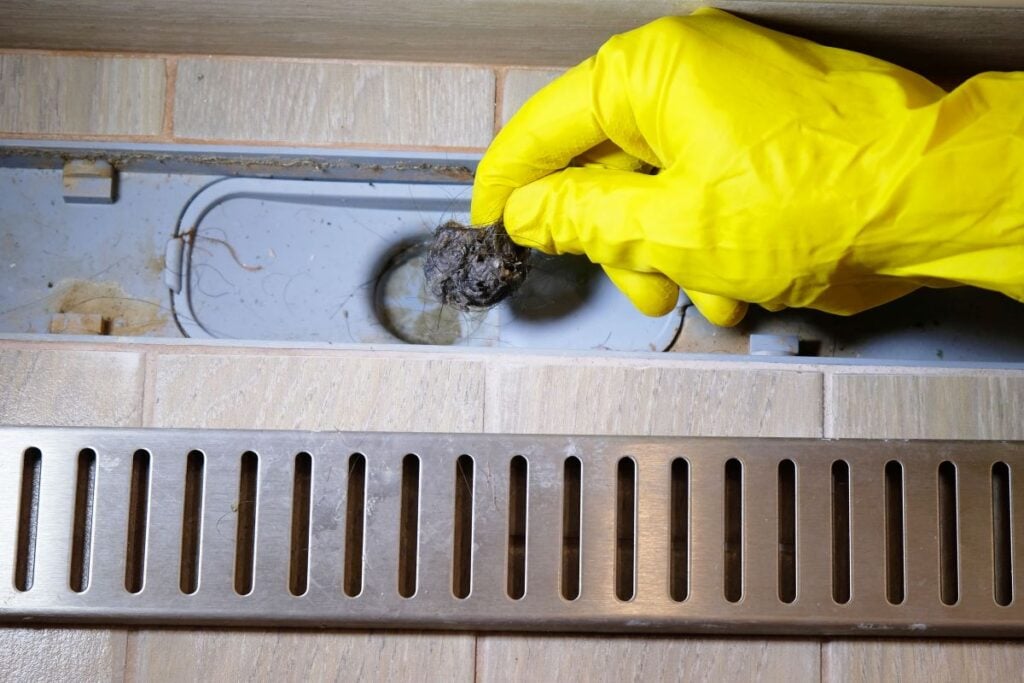
Your shower drain handles more than just water; it also collects hair, soap residue, and oils that slowly build up inside your pipes. Over time, these materials stick together, narrowing the drain and causing water to pool at your feet.
Regular cleaning is the best way to prevent stubborn clogs and maintain healthy water flow. Even small maintenance habits, like catching hair before it enters the drain, make a big difference.
8 Easy Steps to Unclog a Shower Drain
Before grabbing harsh chemical cleaners, try these simple and effective methods to clear your drain. These steps are safe for most plumbing systems and help avoid pipe corrosion or environmental damage.
1. Remove the Drain Cover
Start by taking off the shower drain cover to access the blockage directly.
- Why it matters: Drain covers collect hair and soap scum that often cause surface-level clogs.
- How to do it: Use a screwdriver to remove screws or gently pry up a snap-on cover with a flat tool.
- Safety tip: Wear gloves to protect your hands from sharp edges or buildup.
Once removed, you can see whether the clog is visible or deeper in the drain.
2. Clear Visible Debris by Hand
If hair or gunk is near the surface, removing it manually is often the quickest solution.
- Why it matters: Clearing out visible material prevents the clog from getting worse or moving deeper.
- How to do it: Put on gloves and pull out any hair or soap buildup using your fingers or needle-nose pliers.
- When to call for help: If the drain remains slow after cleaning, the clog may be farther down.
This simple step solves many minor shower drainage problems without needing tools or chemicals.
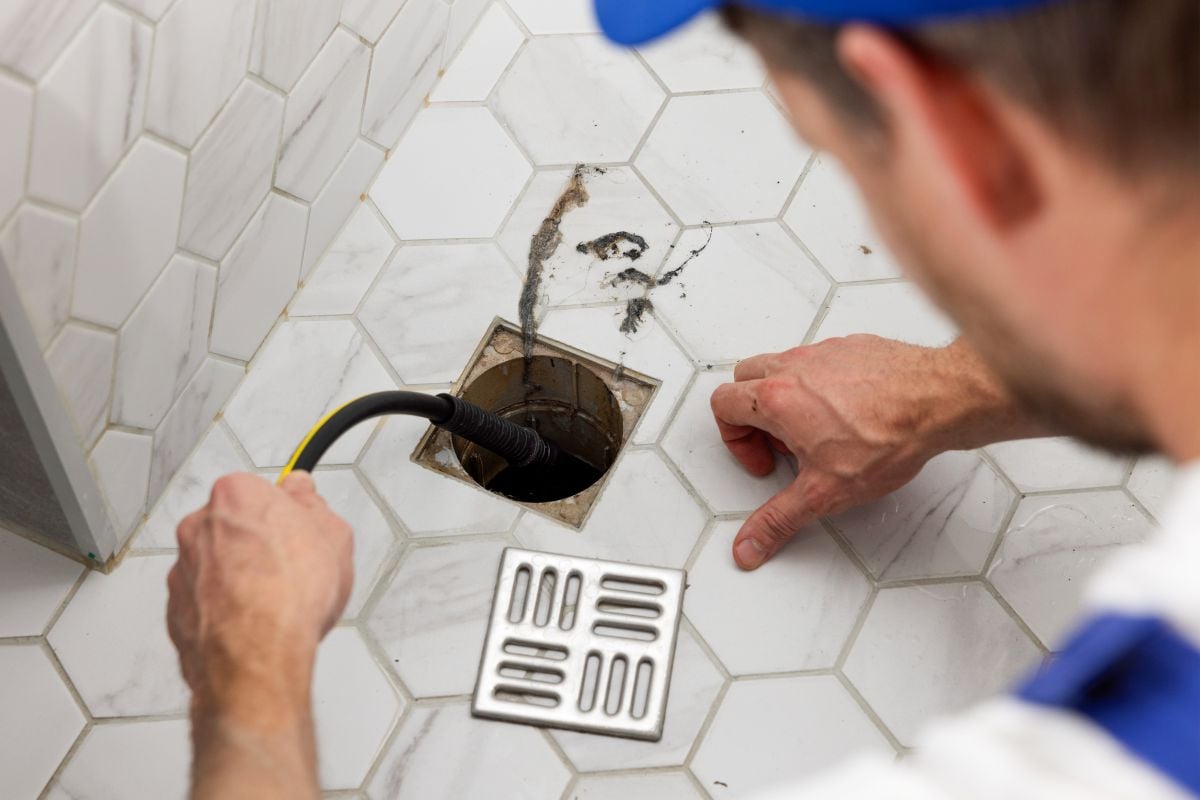
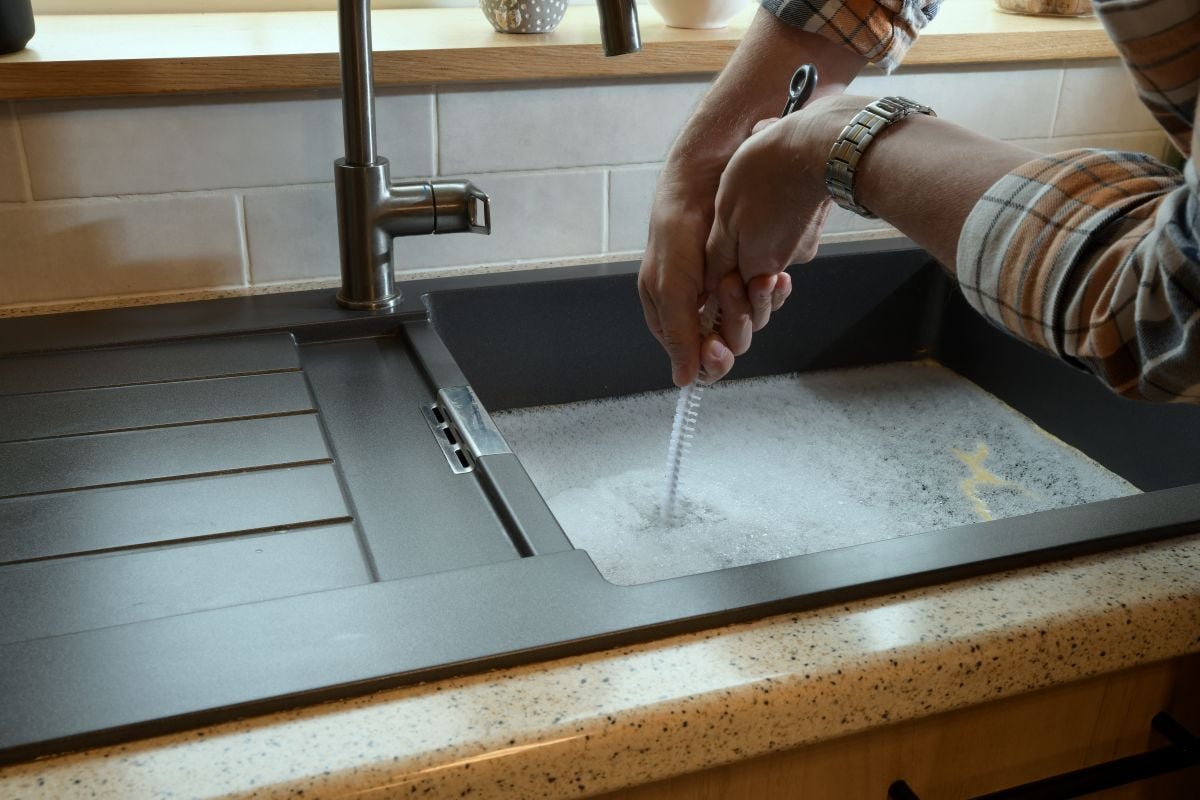
3. Use a Drain Snake or Zip Tool
For deeper clogs, a drain snake or flexible zip tool can grab hair and debris inside the pipe.
- Why it matters: These tools reach beyond what’s visible and remove buildup causing the blockage.
- How to do it: Insert the tool into the drain, twist or push until you feel resistance, and pull it out slowly to extract the debris.
- Tip: Repeat several times until the tool comes out clean.
Drain snakes are inexpensive, reusable, and highly effective for routine shower drain maintenance.
4. Try a Baking Soda and Vinegar Solution
If you prefer a natural cleaning method, baking soda and vinegar create a gentle chemical reaction that helps break down buildup.
- Why it matters: This eco-friendly combination dissolves soap scum and deodorizes drains without harming pipes.
- How to do it: Pour ½ cup of baking soda into the drain, followed by ½ cup of vinegar. Let it sit for 15–30 minutes, then flush with hot water.
- Pro tip: For best results, cover the drain while the reaction happens to increase pressure.
This classic method works best for light to moderate clogs and is safe to repeat monthly as a preventive measure.
5. Flush With Hot Water
Hot water can help loosen grease, soap residue, and minor obstructions inside the drain.
- Why it matters: Regular flushing keeps debris from hardening and clinging to pipe walls.
- How to do it: Slowly pour a kettle or pot of hot (not boiling) water into the drain in two or three stages, waiting a few seconds between each pour.
- Safety note: Avoid boiling water if you have PVC pipes, as it can soften the material.
Combining this step with baking soda and vinegar enhances the cleaning effect.
6. Use a Wet/Dry Vacuum
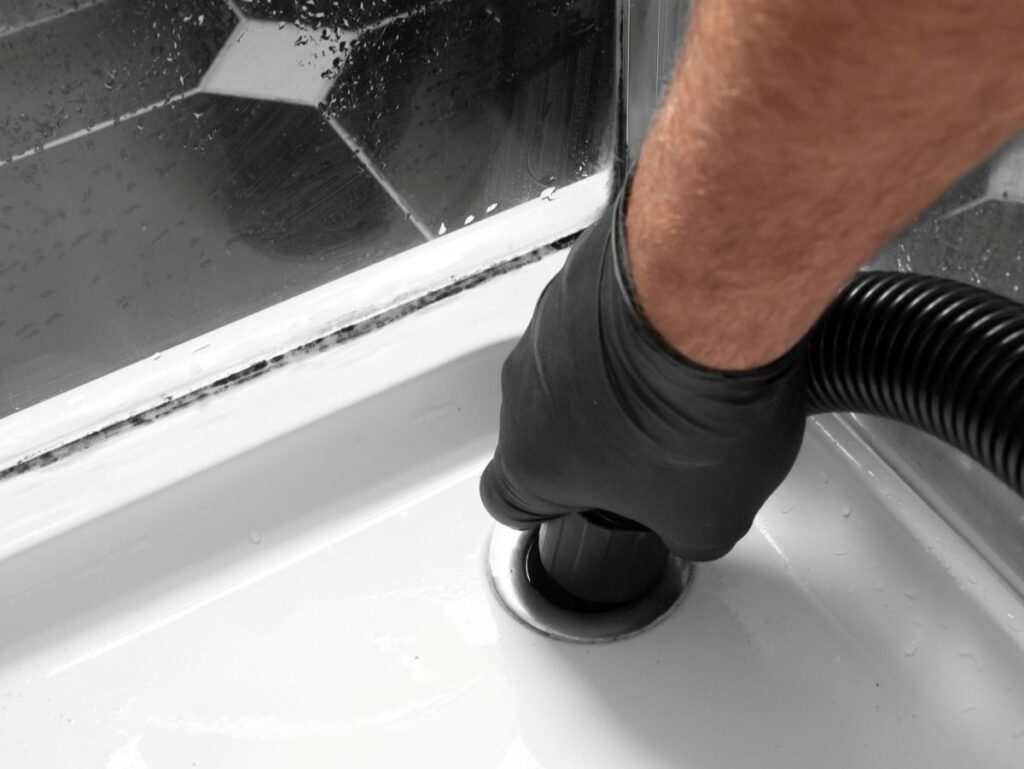
If the clog persists, a wet/dry shop vacuum can remove debris lodged deeper in the line.
- Why it matters: Strong suction can pull out blockages that basic tools can’t reach.
- How to do it: Set the vacuum to liquid mode, cover the vent to prevent mess, and create a tight seal over the drain using the hose attachment. Turn on the vacuum for 15–20 seconds.
- Pro tip: Place a damp towel around the hose to improve suction.
Wet/dry vacuums are powerful and effective, but make sure the drain area is dry before starting to avoid electrical hazards.
7. Check the P-Trap (If Accessible)
Some showers have an accessible P-trap—the curved section of pipe that prevents sewer gases from entering your home. If this area becomes clogged, you may need to remove it for cleaning.
- Why it matters: Hair and debris often collect in the P-trap, creating recurring clogs and odors.
- How to do it: Place a bucket underneath, unscrew the trap joints, and remove the pipe. Clean out debris, rinse, and reinstall tightly.
- When to call for help: If your shower’s P-trap isn’t easily accessible, a plumber can clear it without removing flooring or walls.
Cleaning the trap can restore full drainage and prevent sewer smells from reappearing.
8. Call a Professional for Stubborn Clogs
If you’ve tried multiple methods and water still drains slowly—or backs up entirely—it’s time to bring in a licensed plumber.
- Why it matters: Deep clogs, pipe corrosion, or hidden buildup often require specialized equipment like hydro jetting or video inspections.
- How to do it: Contact a trusted plumbing expert who can safely remove the blockage without damaging your pipes.
- Long-term benefit: A professional cleaning not only fixes the immediate issue but also prevents future blockages.
Sometimes, the problem isn’t a simple clog but a symptom of a larger plumbing issue that needs professional attention.
Preventing Future Shower Drain Clogs
Once your drain is clear, a few easy maintenance habits can keep it that way. Prevention is the best way to avoid future slowdowns or backups.
Good habits and regular cleaning help your plumbing system run more efficiently and extend the lifespan of your pipes.
- Use a drain cover: Catch hair and debris before they enter the drain.
- Clean the cover weekly: Rinse and remove trapped hair buildup.
- Flush with hot water monthly: Keeps soap scum and oils from hardening.
- Use natural cleaners: Baking soda and vinegar are safe, effective options.
- Avoid chemical drain cleaners: These can corrode pipes and harm septic systems.
A few minutes of maintenance each month can prevent most shower clogs altogether.
When To Call Lorenz for Help

Even with the best DIY care, some plumbing issues require professional expertise. If you notice repeated clogs, foul odors, or slow drains in multiple areas of your home, your plumbing system may need deeper cleaning or inspection.
Our licensed technicians at Lorenz Plumbing Heating & Air have the tools and experience to diagnose the issue and restore your system’s performance. Whether it’s a tough clog, drain line blockage, or maintenance check, professional service ensures your plumbing stays reliable year-round.
Keep Water Flowing With Expert Guidance
Knowing how to unclog a shower drain can save time, money, and frustration. From clearing surface debris to using natural cleaning methods, simple steps can often get the job done.
If your shower or household drains are constantly clogging, reach out to Lorenz for expert guidance. We’ll identify the cause, clear your drains safely, and help keep your plumbing system flowing smoothly for years to come.

Lorenz: Your Friends in Heating Plumbing & Air
Reach Out Today!
We’re here 24/7—send us a message and we’ll be in touch shortly.


