



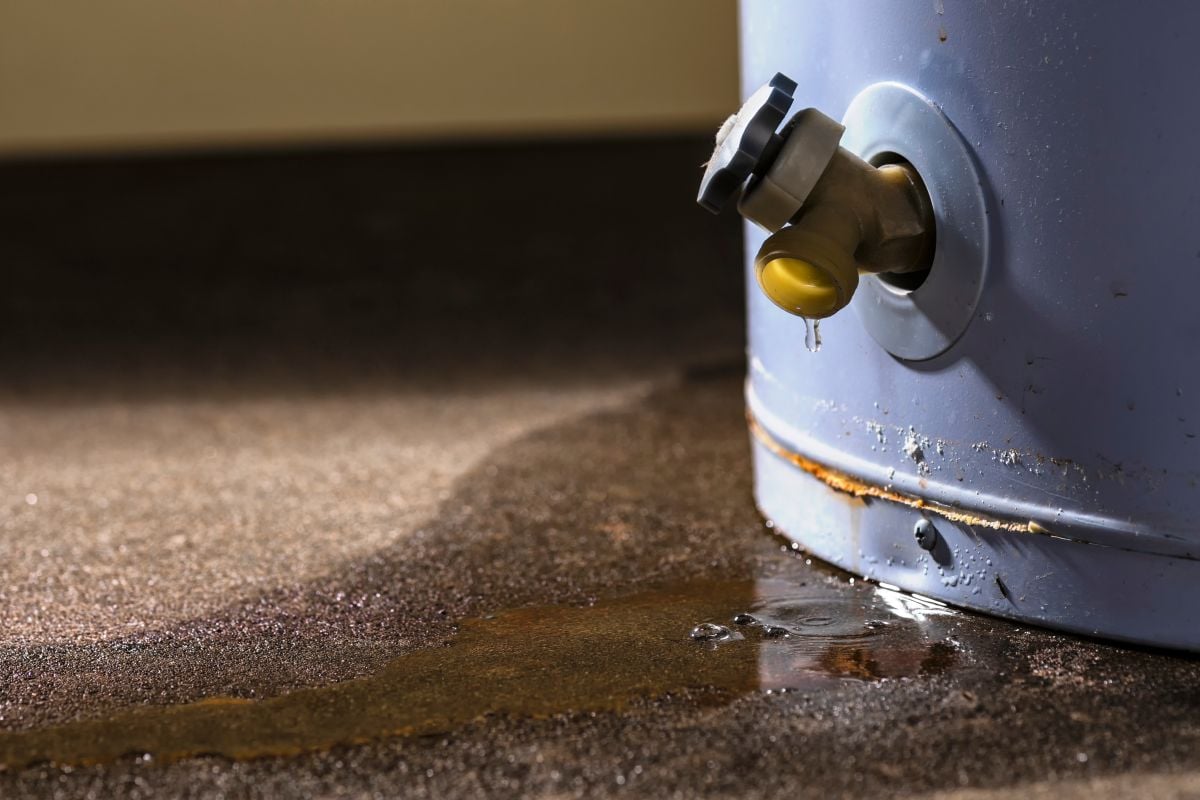
What To Do When Your Water Heater Leaking?
If you’ve discovered your water heater leaking, it’s important to act quickly before the problem causes major water damage. Even a small drip can lead to mold growth, corrosion, or costly repairs if ignored. Knowing what to do right away, and when to call in the experts, can save time, money, and frustration.
- Quick action: Addressing leaks early prevents property damage and safety hazards.
- Common causes: Leaks may come from valves, fittings, or corrosion inside the tank.
- Professional repair: Calling a licensed plumber ensures proper diagnosis and long-lasting solutions.
Why Your Water Heater Might Be Leaking
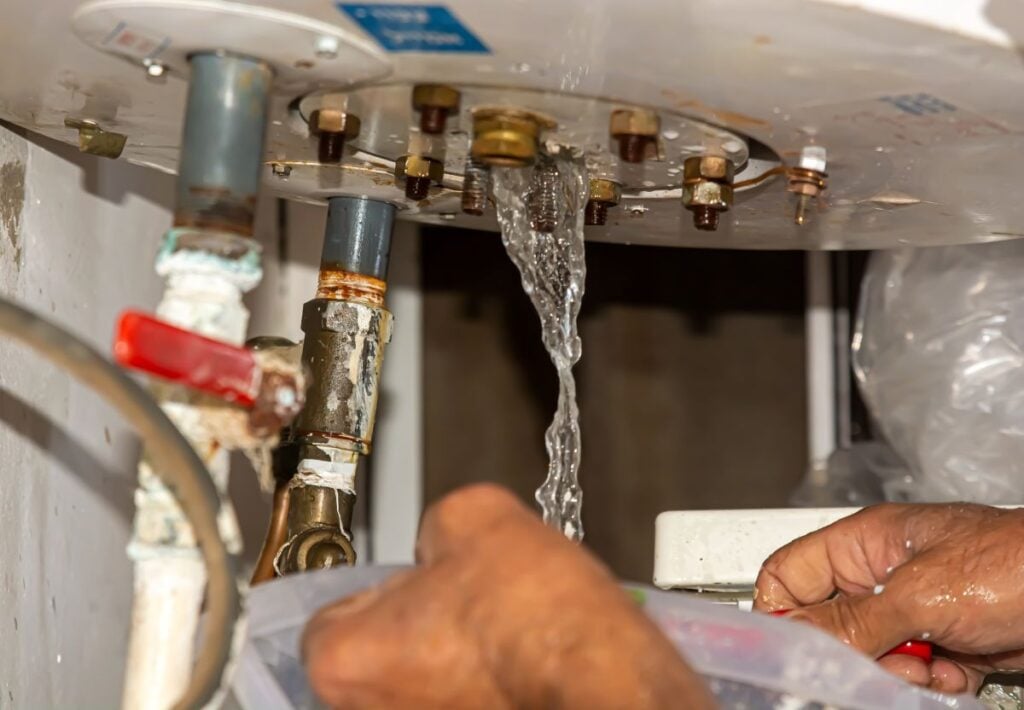
A water heater leak can occur for several reasons. While some are minor and easy to fix, others signal serious internal damage that requires professional replacement. The key is to locate the source of the leak before taking further action.
Most leaks happen because of worn parts, high water pressure, or age-related corrosion. Over time, the tank’s metal lining and joints can weaken, causing small cracks or pinholes that allow water to escape.
7 Things To Do When You Notice a Leak
The sooner you respond, the better your chances of preventing costly damage. Follow these steps to safely manage the situation and determine whether repair or replacement is needed.
1. Turn Off the Power Supply
Before inspecting or touching your water heater, always start by cutting off the power. This step prevents electrical shock and keeps the system from overheating while you work.
- Electric water heaters: Turn off the breaker that powers the unit. Confirm no lights or sounds are coming from the heater.
- Gas water heaters: Turn the gas control valve to “OFF.” The pilot light should go out, stopping fuel flow safely.
Safety should always come first when working around water and electricity or gas.
2. Turn Off the Water Supply
Once power is off, stop the flow of water to prevent flooding or additional leaks.
- Locate the cold-water valve: It’s typically found above the tank. Turn it clockwise to close.
- If inaccessible: Use the home’s main water shutoff valve instead.
Stopping the water flow limits damage and gives you time to inspect the unit safely.
3. Identify the Source of the Leak
After the system is secure, carefully check where the water is coming from. Different leak locations often indicate different issues.
- Top of the tank: Could mean loose fittings or a faulty temperature and pressure (T&P) valve.
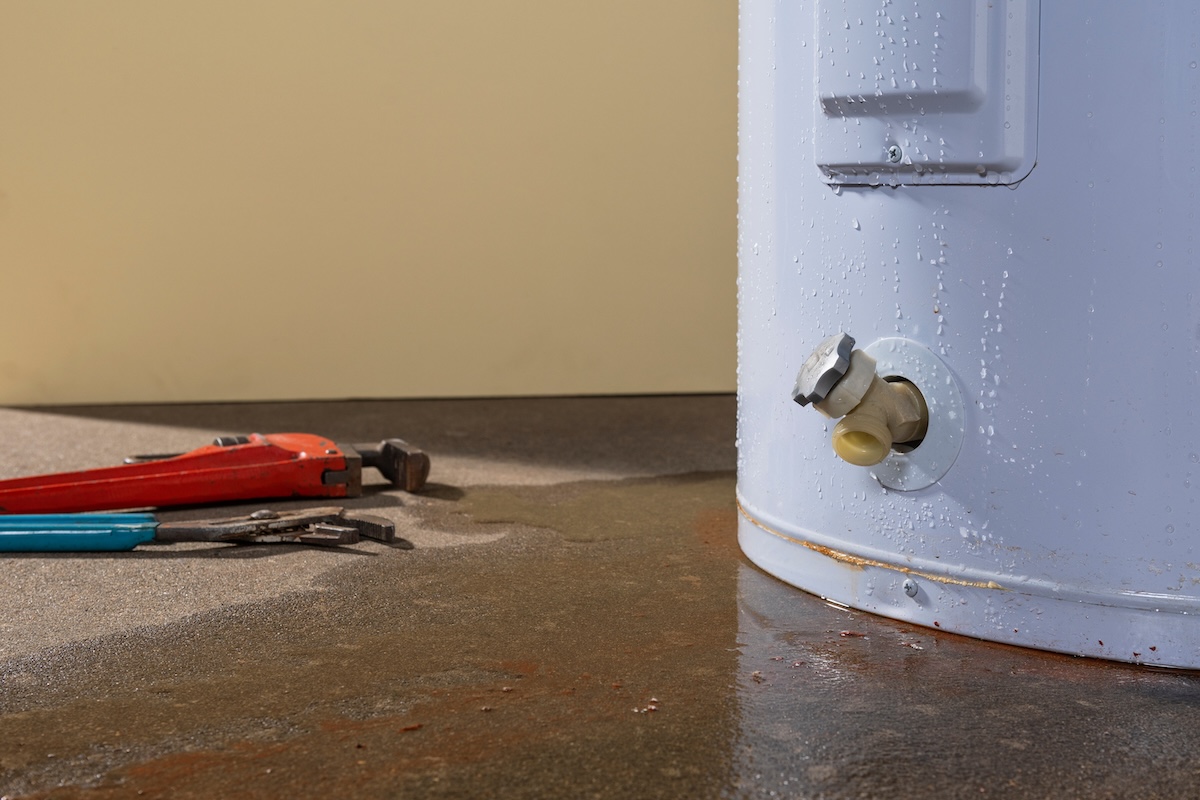
- Bottom of the tank: Often points to internal corrosion or a worn drain valve.
- Pipes and fittings: May indicate condensation or loose joints that need tightening.
If the leak’s origin isn’t visible, dry the area and monitor for moisture returning—this can help you pinpoint the source.
4. Drain the Tank Safely
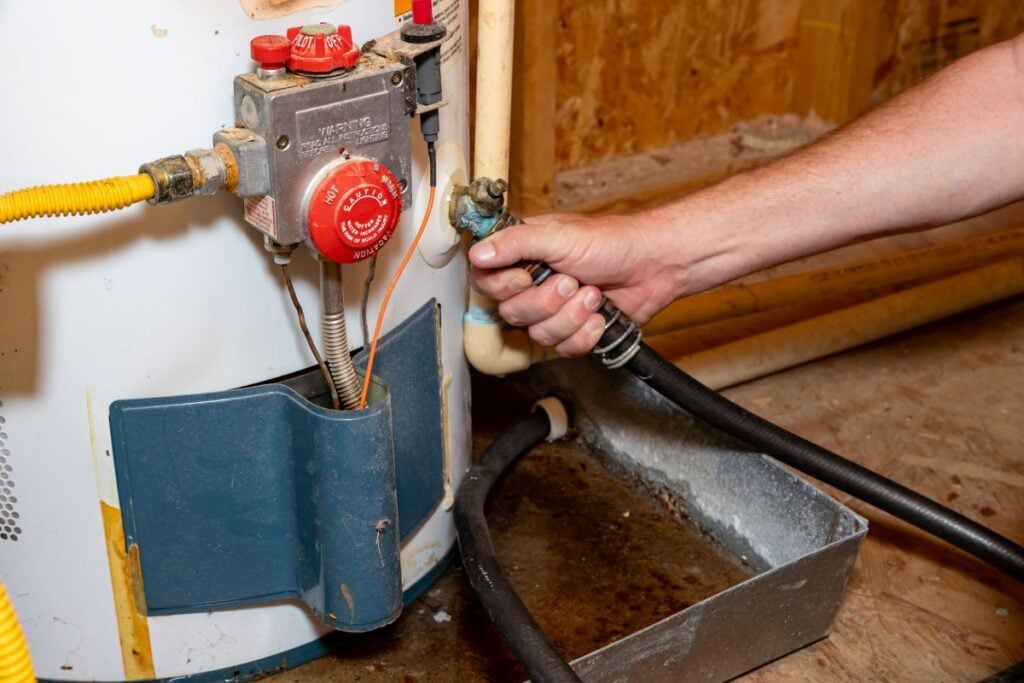
If water continues leaking, draining the tank helps reduce pressure and prevent additional damage.
- Attach a garden hose: Connect to the drain valve near the bottom of the tank.
- Run the hose to a safe drain: Direct the water outside or into a floor drain.
- Open the valve: Let the water drain completely before continuing inspection.
If the valve is clogged or stuck, avoid forcing it—call a plumber to handle it safely.
5. Check the Pressure Relief Valve
The temperature and pressure relief (T&P) valve is a safety feature that prevents over-pressurization. If it’s leaking, that’s a sign of high internal pressure or a faulty component.
- Locate the valve: It’s found on the side or top of the tank with a discharge pipe leading downward.
- Inspect for leaks: Look for dripping water or mineral buildup.
- Fix: Replace the valve if damaged or leaking, but never cap or block it.
This valve protects against serious hazards, so professional replacement is essential when it fails.
6. Examine the Drain Valve
The drain valve allows for periodic maintenance but can loosen or deteriorate over time. A slow drip from this area is common in older units.
- Tighten gently: Use a wrench to snug the valve but avoid overtightening.
- If leaking continues: Replacement is simple and typically done by a licensed plumber.
Drain valve leaks are small but should never be ignored—they often worsen with time.
7. Call a Professional Plumber
If you can’t identify the source or if the leak persists, contact a professional immediately. Licensed plumbers like Lorenz Plumbing Heating & Air have the expertise to assess, repair, or replace your unit safely.
- When to call: Persistent leaks, rust-colored water, or visible corrosion on the tank.
- What to expect: A technician will test pressure levels, inspect fittings, and recommend the best repair or replacement solution.
Water heaters generally last 8–12 years, so if yours is nearing that range and leaking, a new system may be the most practical fix.
Preventing Future Water Heater Leaks
With a few proactive habits, you can significantly reduce the risk of another leak. Preventative maintenance keeps your system running efficiently and extends its lifespan.
- Flush the tank annually: Removes sediment that corrodes the interior lining.
- Inspect fittings and valves: Look for rust or moisture around joints every few months.
- Replace the anode rod: This protective component should be replaced every 3–5 years.
- Monitor water pressure: Excessive pressure can damage internal components.
- Schedule annual maintenance: Professional service from Lorenz keeps your system leak-free.
Small steps like these can prevent costly repairs and improve water heater performance year-round.
Why Choose Lorenz for Water Heater Repair and Replacement
When your water heater is leaking, you need expert help fast. Lorenz Plumbing Heating & Air provides reliable, professional service for Springfield homeowners who want peace of mind and lasting results.
- Rapid response: We handle both emergency and scheduled water heater service calls.
- Expert diagnostics: Our team identifies the root cause before recommending solutions.
- Full-service replacement: We install high-efficiency gas, electric, and tankless models.
- Trusted local reputation: Decades of experience serving Springfield with honesty and quality workmanship.
From minor leaks to full replacements, Lorenz delivers professional plumbing service that keeps your home protected.
Count on Lorenz When Your Water Heater Is Leaking
Finding your water heater leaking is never convenient, but quick action and professional service can prevent a minor issue from becoming a major disaster. Turning off the power and water, draining the tank, and checking for valve leaks are important first steps—but lasting protection comes from expert care.
At Lorenz Plumbing Heating & Air, our experienced team provides fast, reliable water heater repairs and replacements throughout Springfield and surrounding areas. Contact Lorenz today to schedule your water heater service and keep your home safe, efficient, and dry.

Lorenz: Your Friends in Heating Plumbing & Air
Reach Out Today!
We’re here 24/7—send us a message and we’ll be in touch shortly.


